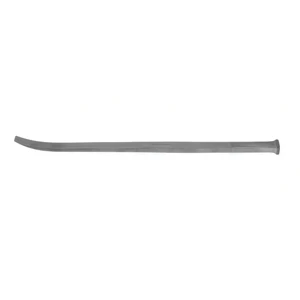
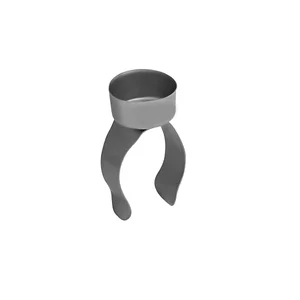
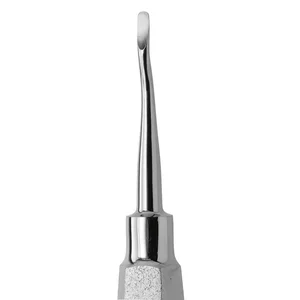
A set name is only a label. Two quotations can both say “dental procedure set” while containing different quantities, patterns, sizes and configurations. A dependable comparison therefore starts with the itemized contents, not the headline piece count or the lowest total price.
This method is intended for distributors, dental-group, institutional and hospital procurement teams and sourcing professionals who need a traceable comparison. It does not replace clinical approval, a facility specification, the manufacturer’s instructions or market-specific regulatory review.
1. Freeze the requested scope before comparing offers
Create one controlled requirement sheet and give it a version number and date. Record the intended set or workflow, required delivery quantity, target market, packaging unit and who has authority to approve substitutions. If the request comes from an existing tray, identify the source of every line: an approved catalogue, a facility list, an annotated photograph or a physical sample.
Do not silently combine several old lists. Differences between departments, clinicians or purchasing periods should remain visible until an authorized reviewer resolves them.
2. Normalize every line into the same fields
Convert each supplier offer into a common worksheet. One row should represent one requested configuration, even when a supplier groups several sizes together.
| Field | What to record | Why it matters |
|---|---|---|
| Buyer line ID | A stable number such as GS-001 | Keeps comments attached to the right requirement. |
| Instrument family | Generic family or approved pattern name | Prevents a trade name from becoming the entire specification. |
| Quantity | Units per set and number of sets | Separates set composition from order quantity. |
| Dimensions | Overall length plus any critical working dimensions | Exposes offers that look similar but are not the requested size. |
| Configuration | Straight/curved, toothed/non-toothed, sharp/blunt, lock or handle style as applicable | Captures functional differences that names alone can hide. |
| Supplier reference | Catalogue or drawing number and revision | Provides an auditable link to the offered item. |
| Evidence | Catalogue page, drawing, label, photograph or sample record | Shows what supports the supplier’s statement. |
| Variance status | Exact, proposed alternative, unclear or not offered | Stops an unreviewed substitution from appearing compliant. |
3. Recalculate the piece count
Multiply each line quantity and calculate the total independently. State whether a tray, basket, case, silicone holder or accessory is counted as a “piece.” A marketing piece count is not useful unless all bidders apply the same rule.
Also distinguish “one set contains two forceps” from “two sets each contain one forceps.” This simple separation prevents many quantity errors at purchase-order stage.
4. Classify substitutions instead of hiding them
A proposed alternative should be a separate, reviewable decision. Ask the supplier to identify the original requested line, the proposed reference, every known difference and the evidence supplied. The buyer can then mark it accepted, rejected, accepted for sample evaluation or pending clarification.
Do not treat similar photographs, a familiar family name or an approximate length as proof of equivalence. If a critical dimension, working-end geometry or locking feature is unknown, record it as unknown.
5. Compare commercial terms after technical normalization
Once line-level compliance is visible, compare unit price, set price, tooling or sample cost, packaging, quotation validity, lead-time basis, delivery terms and the treatment of approved changes. Keep technical score and commercial score separate so a low total does not conceal omitted or substituted instruments.
6. Use a controlled sample-approval record
For lines requiring physical confirmation, record the sample reference, date received, drawing or catalogue revision, inspection criteria, reviewer and outcome. Photographs can support traceability, but they should not replace measurements or an approved reference where those are required.
If a sample is approved with conditions, write the conditions into the final specification and purchase order. A verbal qualification is easy to lose between sampling and production.
A compact decision rule
- Comparable: the requested line and offered line use the same documented fields.
- Conditionally comparable: a variance is declared and an authorized reviewer can assess it.
- Not yet comparable: a critical field or evidence source is missing.
The World Health Organization’s medical-device specification template uses structured fields for identification, purpose, technical and physical characteristics, accessories, packaging, documentation, safety and standards. That is a useful model for a controlled set worksheet, even when the product is a manual instrument rather than capital equipment. See the WHO technical specification user guide and its procurement process resource guide.
Need a starting point? Review SurgiValley’s guide to preparing a dental instrument RFQ, explore instrument set planning, or send an itemized requirement for review.